Leakey Journeys
Exploring the past · Inspiring the future
KNM-ER 42700
Region
Ileret, East Turkana
Epoch
Early Pleistocene
Taxon
Homo erectus
GPS
4.30844°N, 36.27567°E
Specimen ID
KNM-ER 42700
Type
skull
Discovered
Kyalo Manthi (2002)
Age (Ma)
2.0
X
54
Y
25
Significance
Smallest H. erectus skull; Asian morphology in Africa
Connections
Contemporary H. erectus specimens from East Turkana
knmer992,knmer3733
https://africanfossils.org/hominids/knmer-42700?o=1
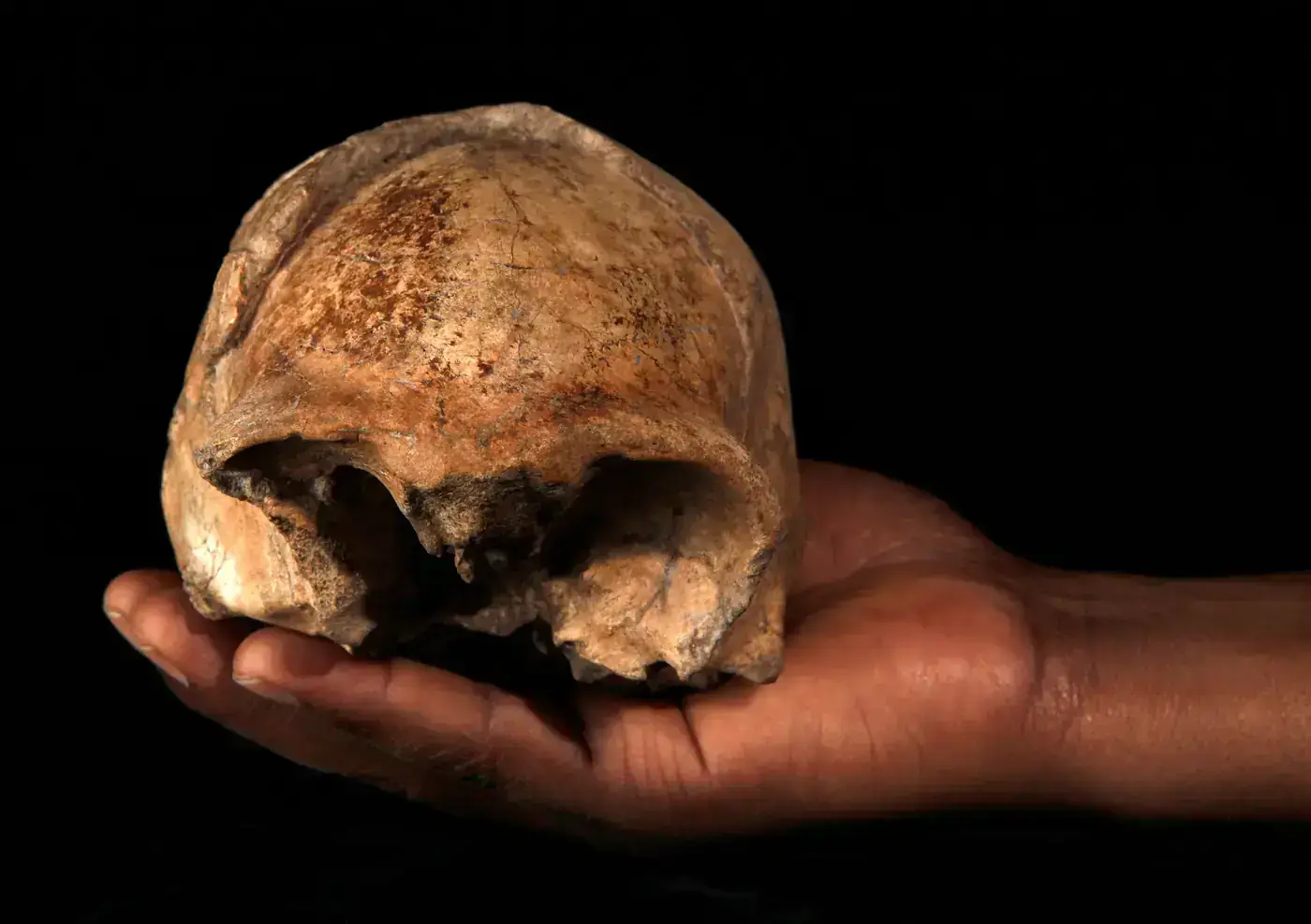
This discovery from Ileret at east Turkana was made by Kyalo Manthi in 2002. The skull was encased in sandstone rock with only the ear hole outline visible. After months of careful laboratory cleaning, the beautifully preserved cranium and brow ridges were revealed, though the face and lower jaw are missing. Significant as one of the smallest known skulls of Homo erectus, with characters previously thought to define Asian varieties including a slight keel along the skull crest. Homo erectus was the first human ancestor to move out of Africa 1.8 million years ago, with fossil remains found from Kenya to China, Indonesia, and Georgia.
KNM-WT 15000 (Turkana Boy)
Nariokotome, West Turkana
4.103316°N, 35.881203°E
KNM-WT 15000
Kamoya Kimeu (1984)
Homo erectus
Early Pleistocene
skeleton
1.6
43.5
45
Most complete early human skeleton; growth evidence
Contemporary with early Homo and Paranthropus species
knmer1470,knmwt17000
https://africanfossils.org/hominids/knmwt-15000-c?o=1
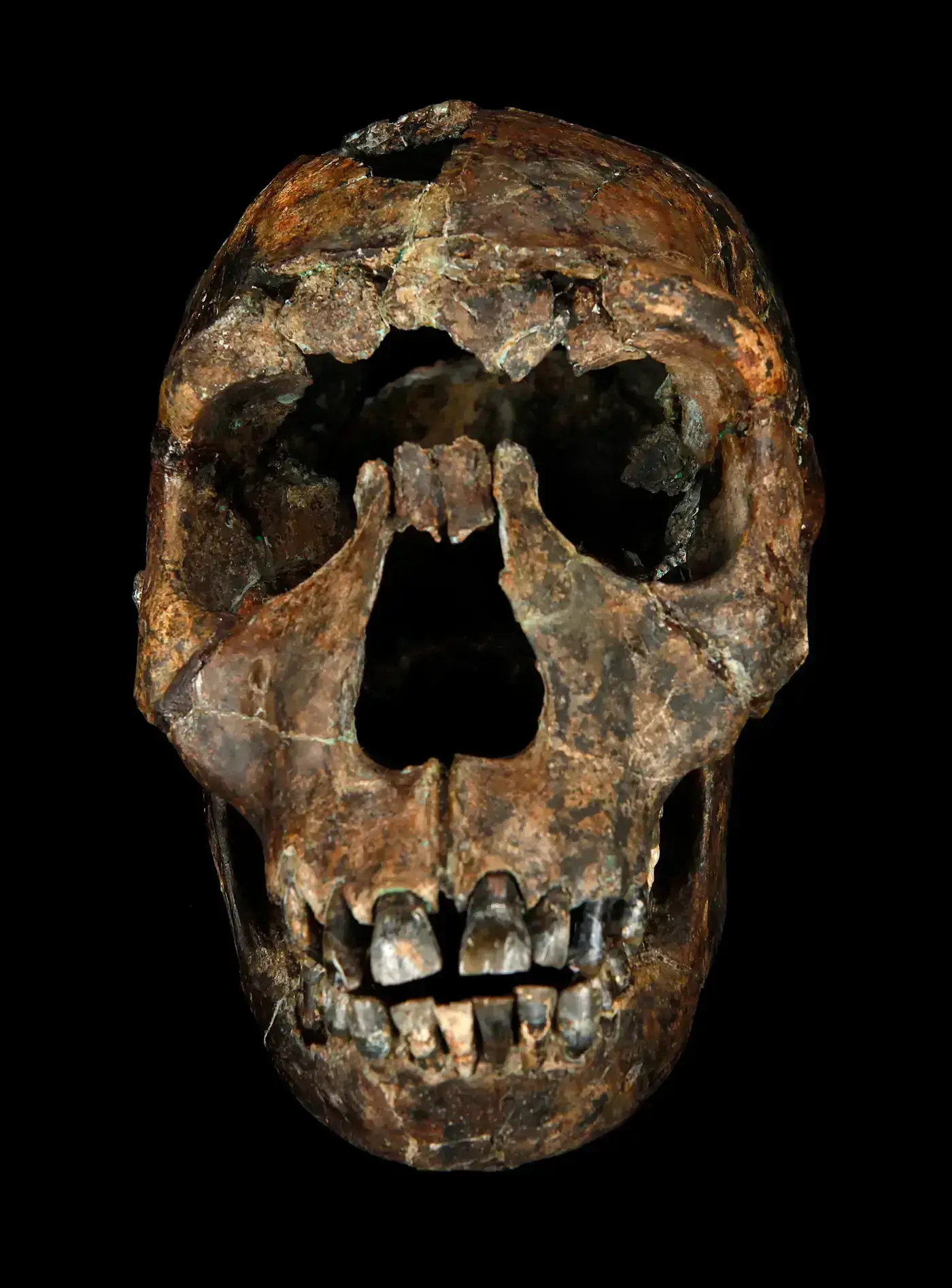
This 1.6 million year old skeleton of Homo erectus was discovered on a Sunday morning in August 1984 when Kamoya Kimeu spotted a matchbox-sized skull fragment on a gentle slope near the Nariokotome River. The excavation revealed one of the most important fossil discoveries in East Africa, with pieces of skull, teeth, ribs, and eventually a remarkably complete skeleton. This adolescent specimen transformed our understanding of growth, body proportions, and early human dispersal out of Africa.
KNM-ER 1470 (Homo rudolfensis)
Karari Ridge, East Turkana
4.16323°N, 36.38869°E
KNM-ER 1470
Bernard Ngeneo (1972)
Homo rudolfensis
Early Pleistocene
skull
1.9
64
32
Large brain; flat-faced early Homo
Ancestor to later Homo lineages; contemporary with multiple hominins
knmer992,knmwt15000,knmer1813
https://africanfossils.org/hominids/knmer-1470?o=1
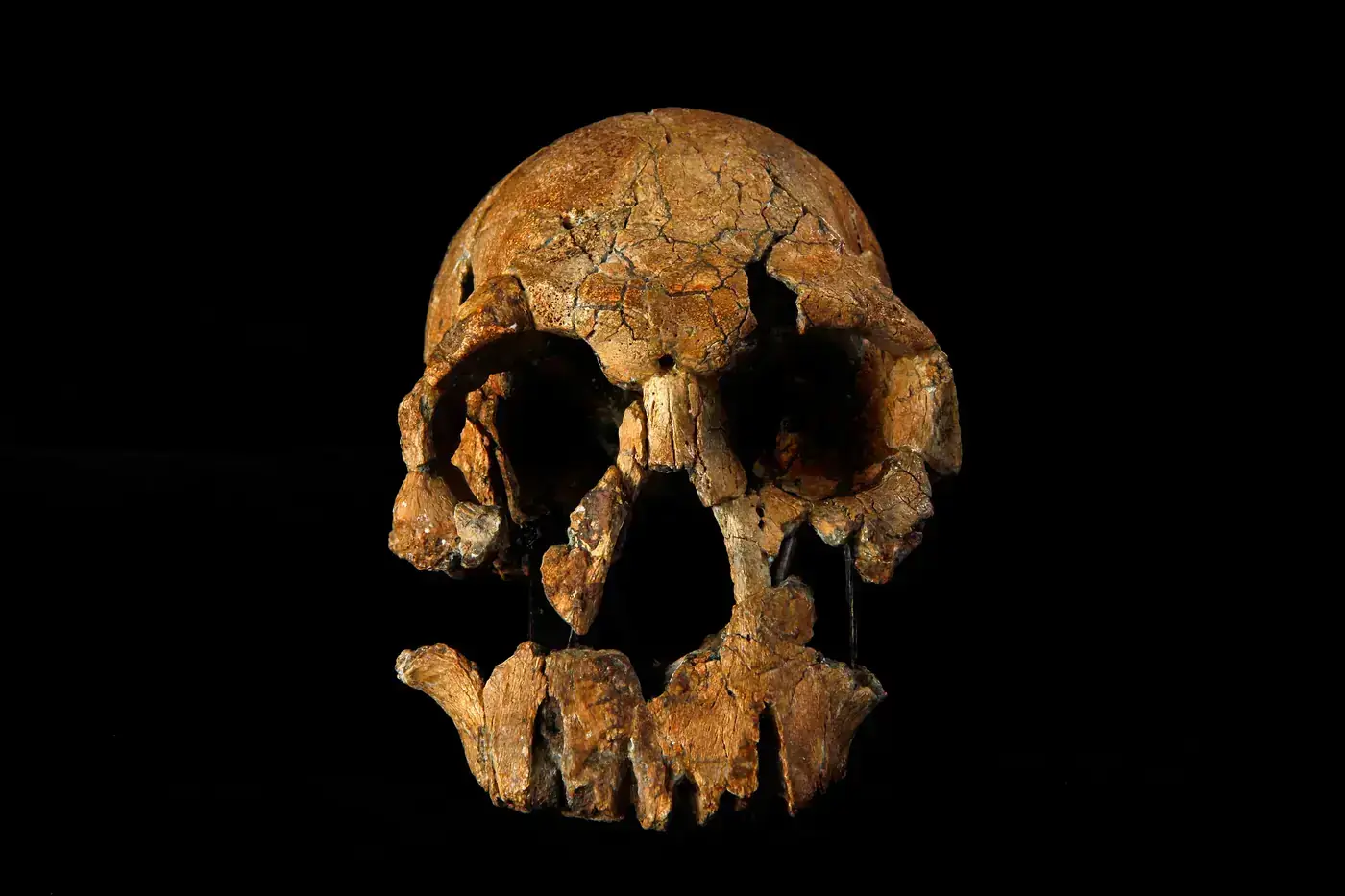
This 1.9 million year old hominin cranium was discovered in 1972 by Bernard Ngeneo and reconstructed by Meave Leakey from hundreds of broken fragments. It represents an almost complete skull of early Homo with significant large brain size typical of our genus. Distinctive for its straight profile when viewed from the side, it was named Homo rudolfensis after Lake Rudolf (now Lake Turkana).
KNM-ER 992 (Homo ergaster)
Ileret, East Turkana
4.3038°N, 36.2709°E
KNM-ER 992
Koobi Fora Research Project (1971)
Homo erectus (Homo ergaster)
Early Pleistocene
skull
1.5
54
25
Type specimen of H. ergaster
Contemporary with P. boisei at Ileret
knmer42700,knmer406
https://africanfossils.org/hominids/knmer-992-a?o=1
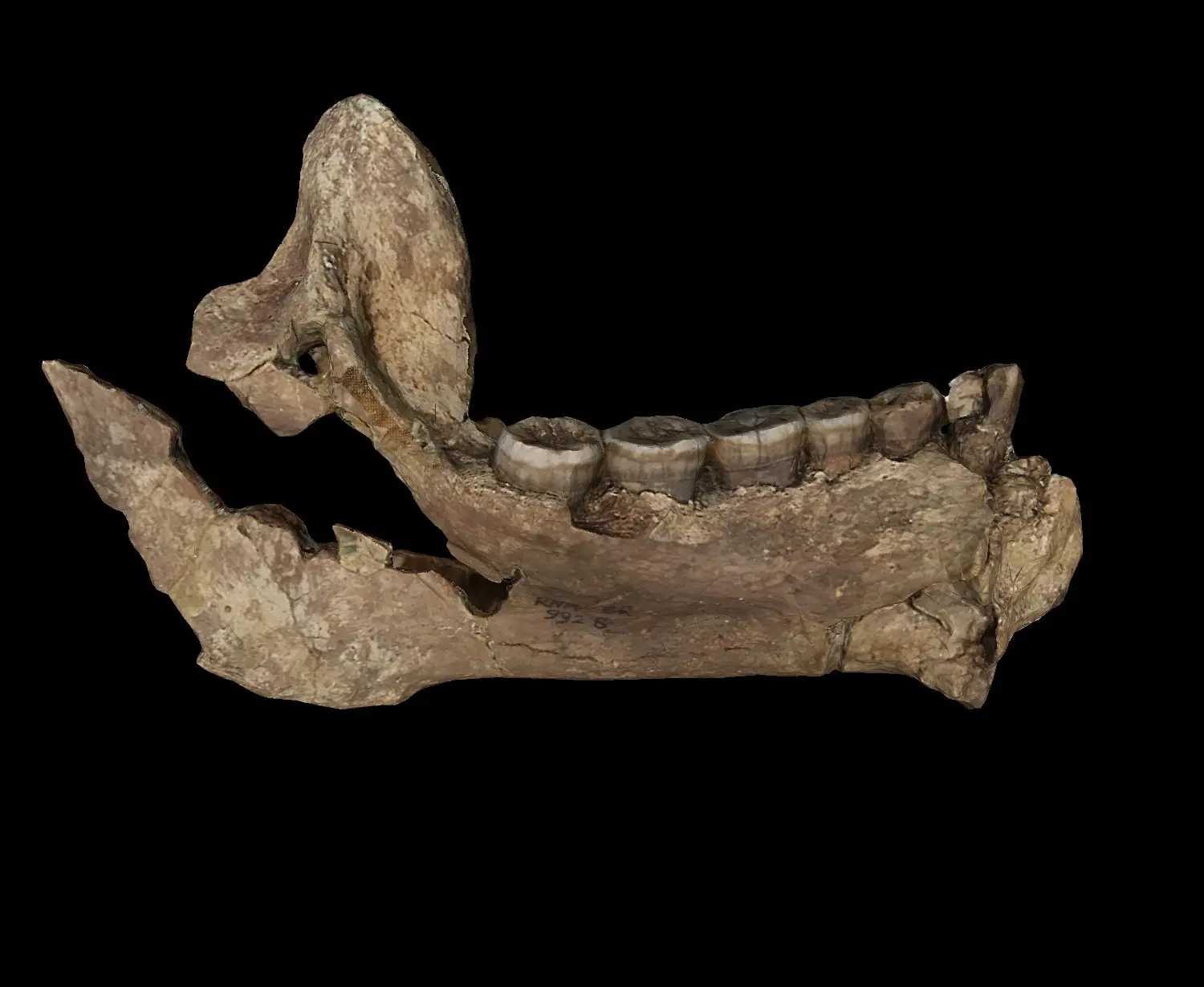
This lower jaw was discovered in 1971 near Ileret in an extraordinary circumstance - the fossil hunting team was taking cover from gunfire when they spotted this specimen in nearby bush. Designated as the type specimen of Homo ergaster by Colin Groves in 1975.
KNM-ER 406 (Paranthropus boisei)
Ileret, East Turkana
4.06897°N, 36.36279°E
KNM-ER 406
Richard & Meave Leakey (1969)
Paranthropus boisei
Early Pleistocene
skull
1.9
54
25
Complete robust australopithecine cranium
Contemporary with H. erectus specimens at Ileret
knmer992,knmer732
https://africanfossils.org/hominids/knmer-406?o=1
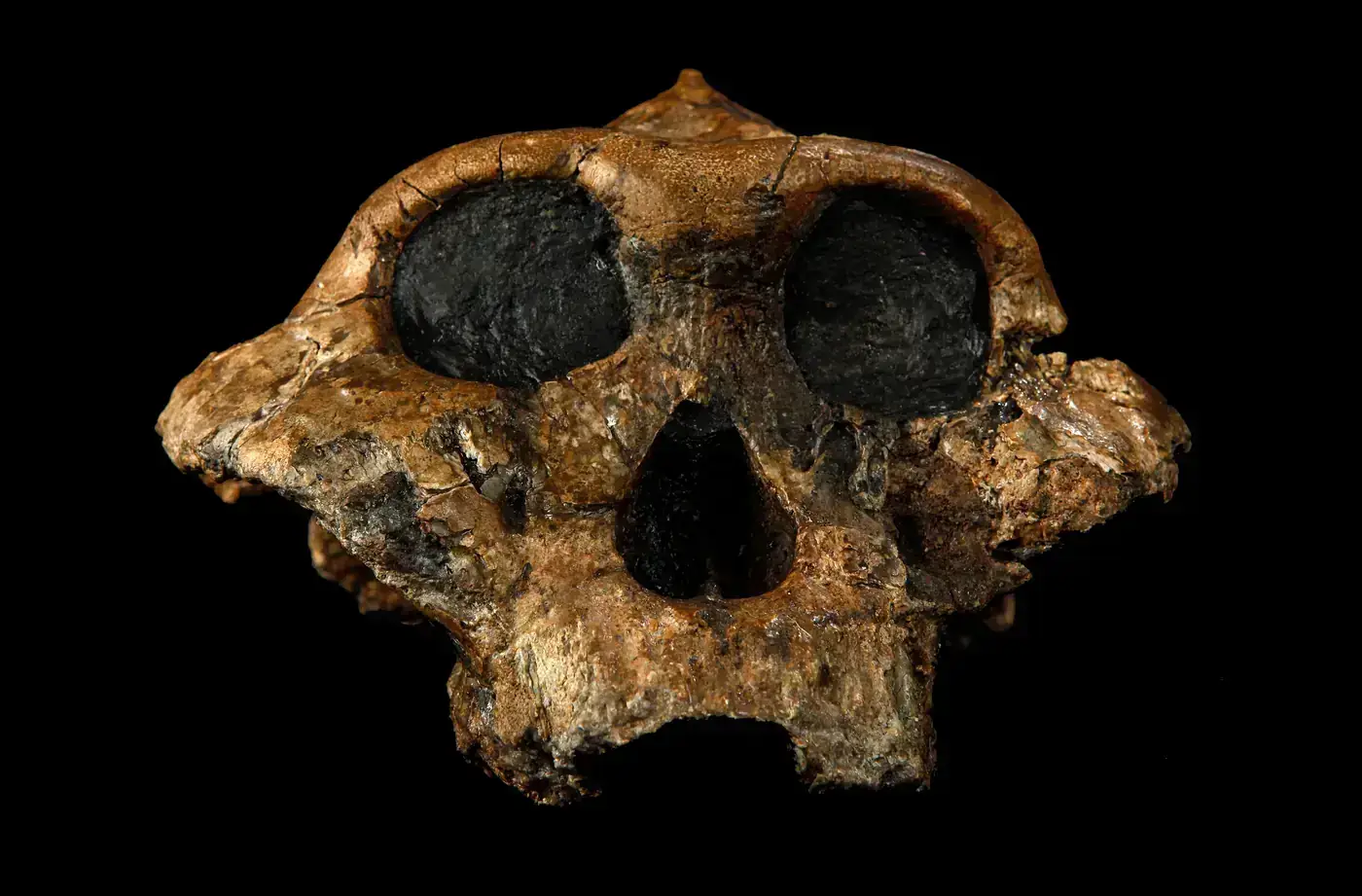
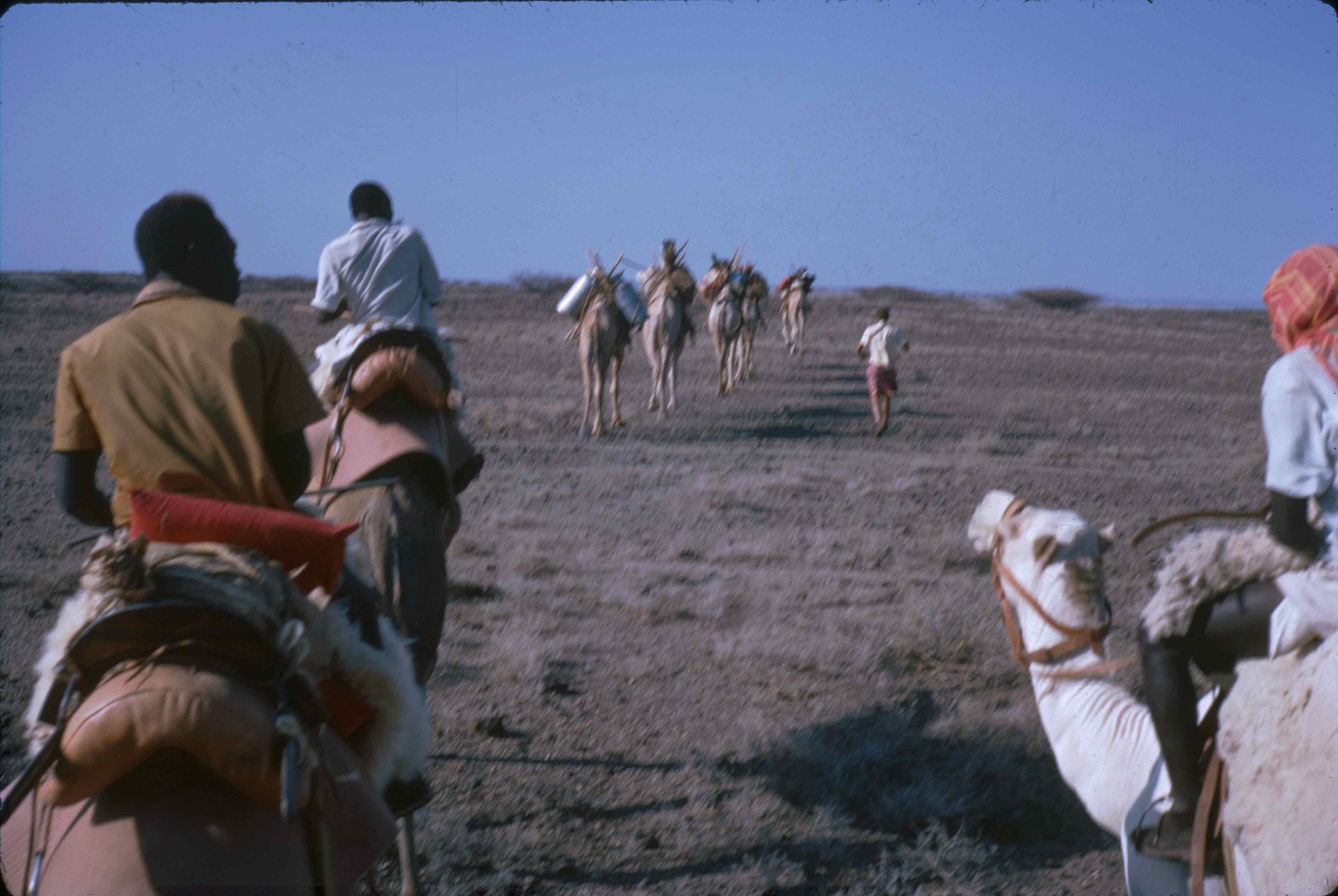
Exploring unknown sites near Ileret in 1969 with camels, Richard and Meave Leakey spotted this complete skull rolling directly at them from a dry sand river bank. Complete with some sandstone but without teeth, it would certainly have been lost in the next rains.
KNM-ER 1813 (Homo habilis)
Bura Hasuma, East Turkana
3.8597°N, 36.35565°E
KNM-ER 1813
Kamoya Kimeu (1973)
Homo habilis
Early Pleistocene
skull
1.88
55
48
"Handy Man" tool-maker evidence
Contemporary early Homo from East Turkana
knmer1470
https://africanfossils.org/hominids/knmer-1813?o=1
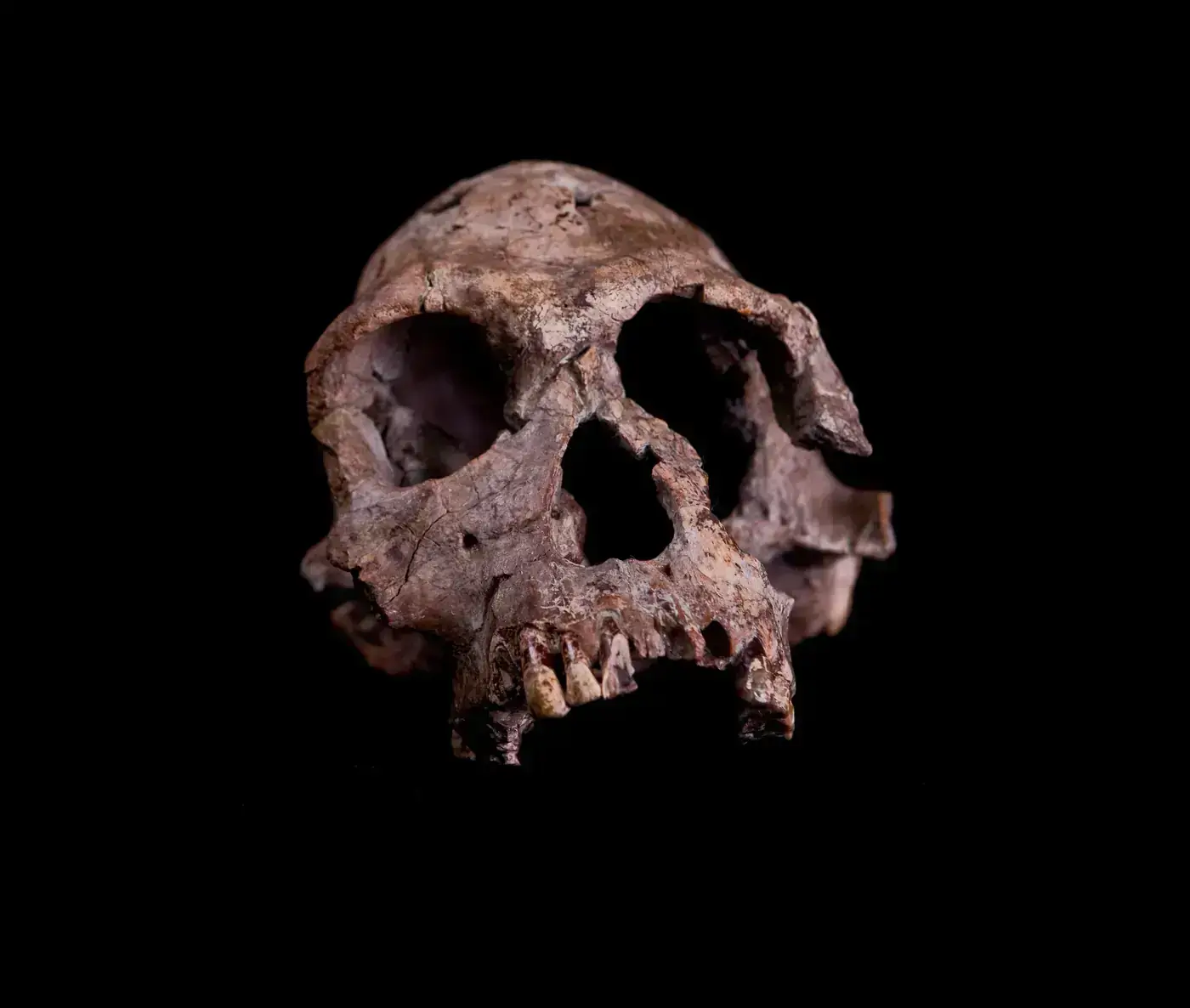
This delicate and small skull of Homo habilis was discovered in 1973 by Kamoya Kimeu who spotted fragments of the upper jaw with beautifully preserved teeth. Richard and Meave Leakey reconstructed the cranium in the field.
KNM-ER 3733 (Homo erectus)
Koobi Fora Ridge, East Turkana
3.96372°N, 36.30675°E
KNM-ER 3733
Bernard Ngeneo (1975)
Homo erectus
Early Pleistocene
skull
1.75
52.5
35
Most complete H. erectus cranium with face
Contemporary with multiple hominin species; direct human ancestor
knmer42700,knmwt15000
https://africanfossils.org/hominids/knmer-3733?o=1
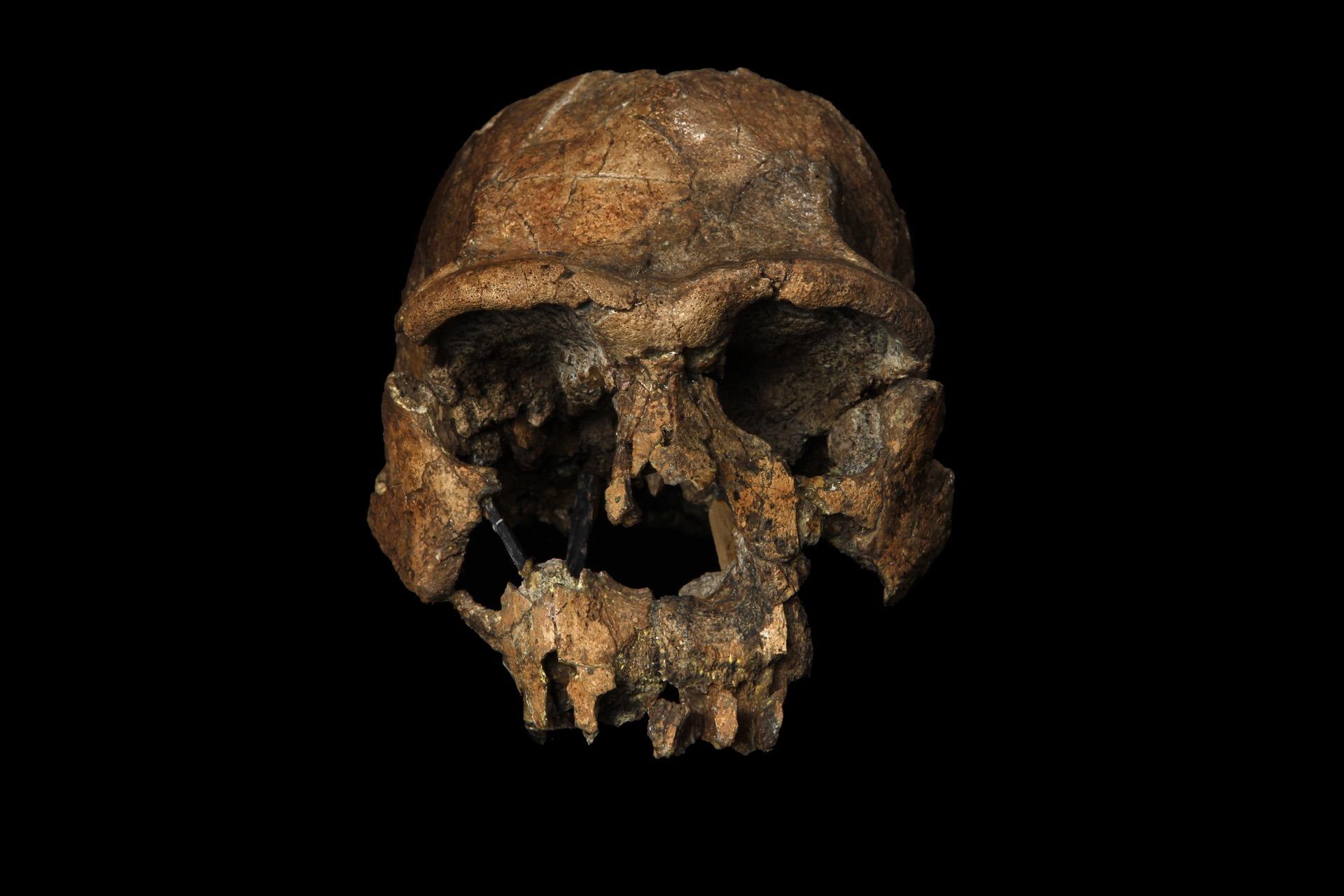
This nearly complete cranium was found in 1975 by Bernard Ngeneo with brow ridges just visible on the surface. Richard Leakey carefully excavated this fragile specimen over three days. One of the most complete H. erectus skulls from Africa with face and teeth.
KNM-WT 17000 (Black Skull)
Lomekwi I, West Turkana
3.877831°N, 35.81185°E
KNM-WT 17000
Alan Walker (1985)
Paranthropus aethiopicus
Pliocene
skull
2.5
41
50
Ancestor to P. boisei; robust australopithecine
Ancestral to later robust australopithecines
knmer406,knmer732
https://africanfossils.org/hominids/knmwt-17000?o=1
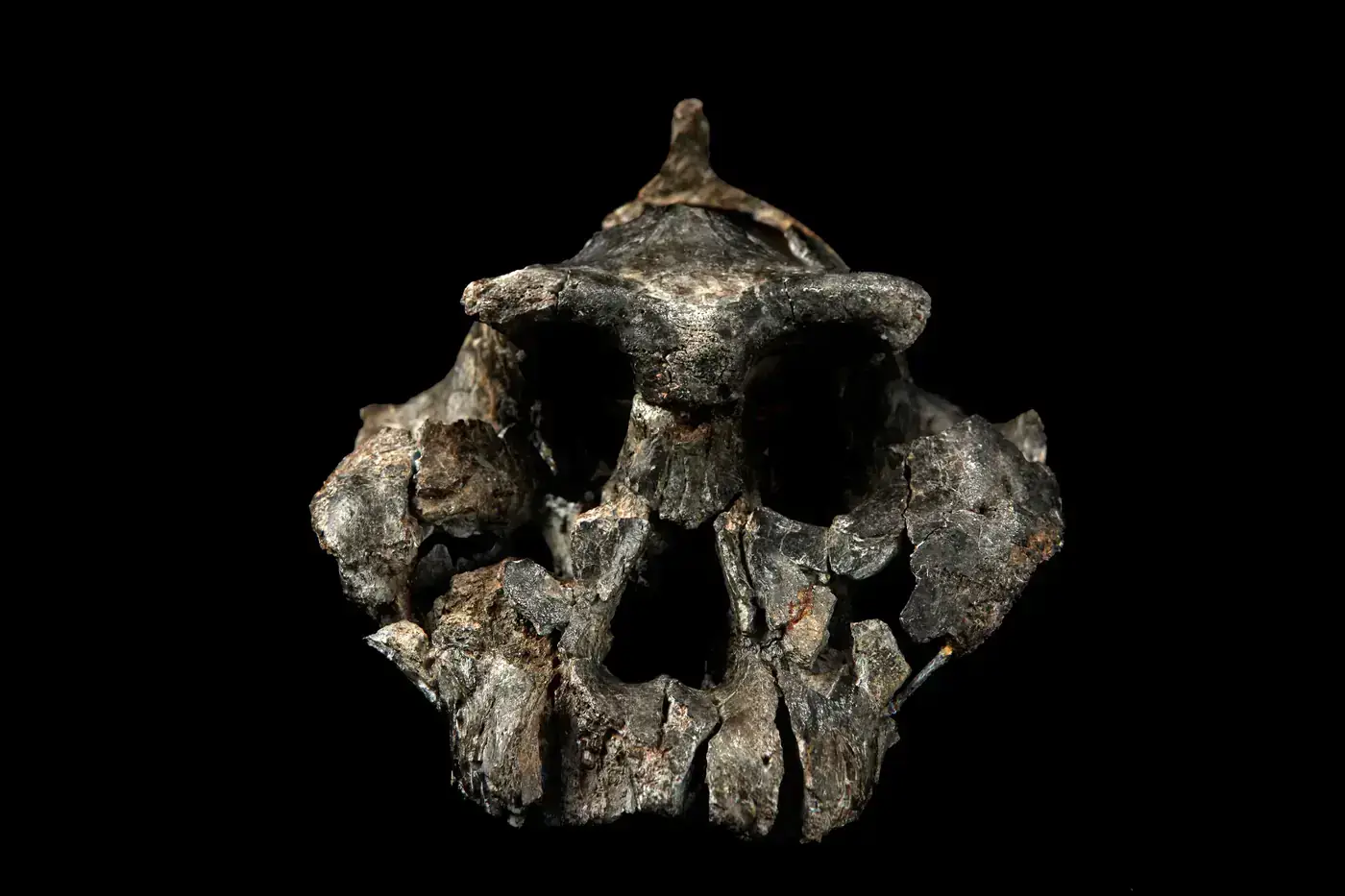
This impressive, relatively complete skull is very dark in color, earning it the name "Black Skull." Found in 1985 by Alan Walker near Nariokotome. A predecessor to P. boisei with smaller brain and more protruding face.
KNM-KP 29283 (Au. anamensis)
Kanapoi, West Turkana
2.302297°N, 36.089685°E
KNM-KP 29283
Wambua Mangao (1994)
Australopithecus anamensis
Early Pliocene
skull
4.16
48
94
Early bipedalism evidence; 4+ million years old
Ancestral to later Homo lineages
knmwt40000
https://africanfossils.org/hominids/knmkp-29283?o=1
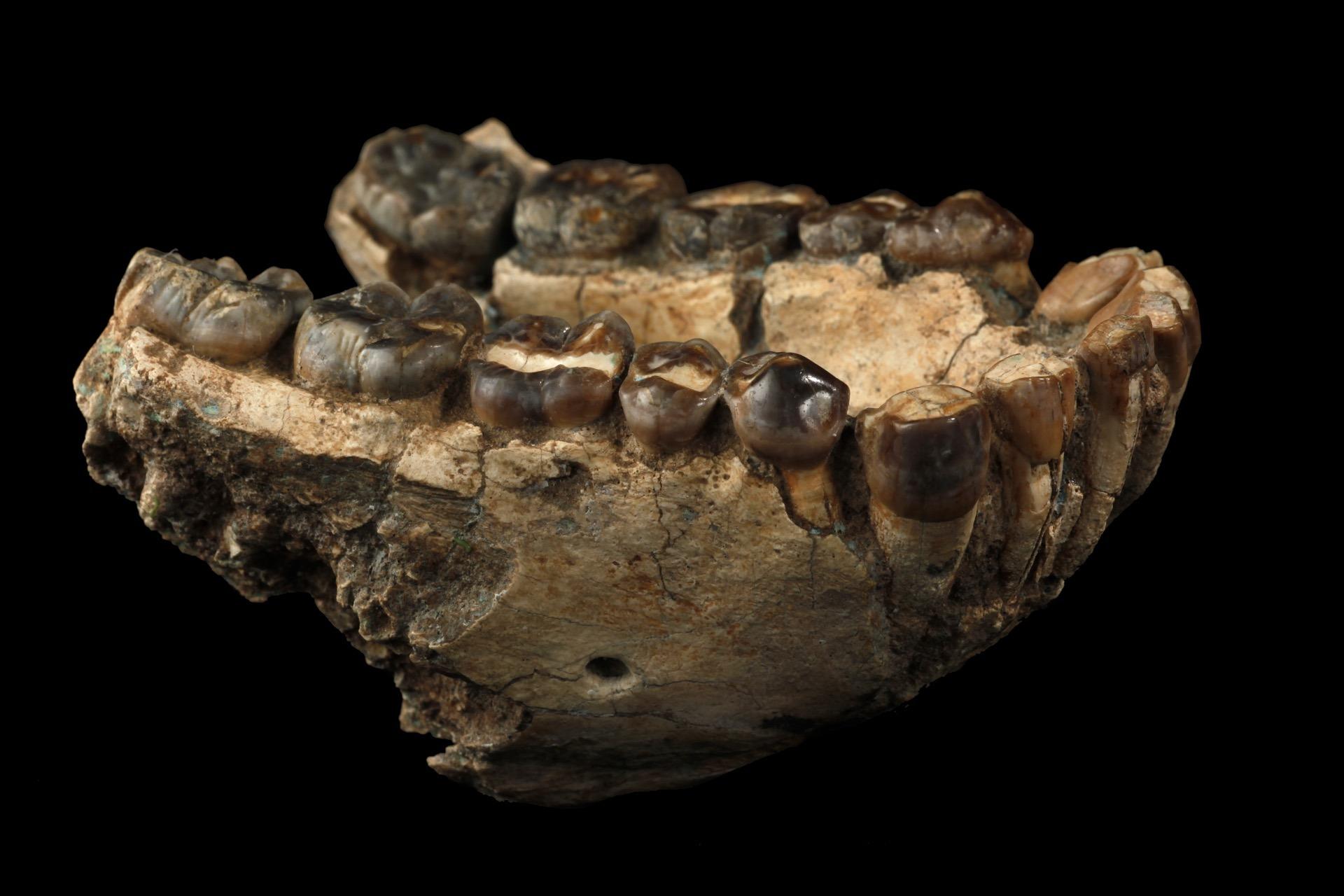
After five years at Lothagam with few hominin finds, the team moved to Kanapoi. Wambua Mangao found the first half of this upper jaw of Australopithecus anamensis dated at 4.16 million years. The maxilla shows primitive ape-like features yet associated tibiae prove bipedalism.
KNM-WT 40000 (Kenyanthropus platyops)
Lomekwi VI, West Turkana
3.865136°N, 35.751259°E
KNM-WT 40000
Justus Edung (1999)
Kenyanthropus platyops
Late Pliocene
skull
3.2
41
50
Flat-faced ancestor; 3+ million year diversity
Potential ancestor to H. rudolfensis
knmer1470,knmkp29283
https://africanfossils.org/hominids/knmwt-40000-?o=1
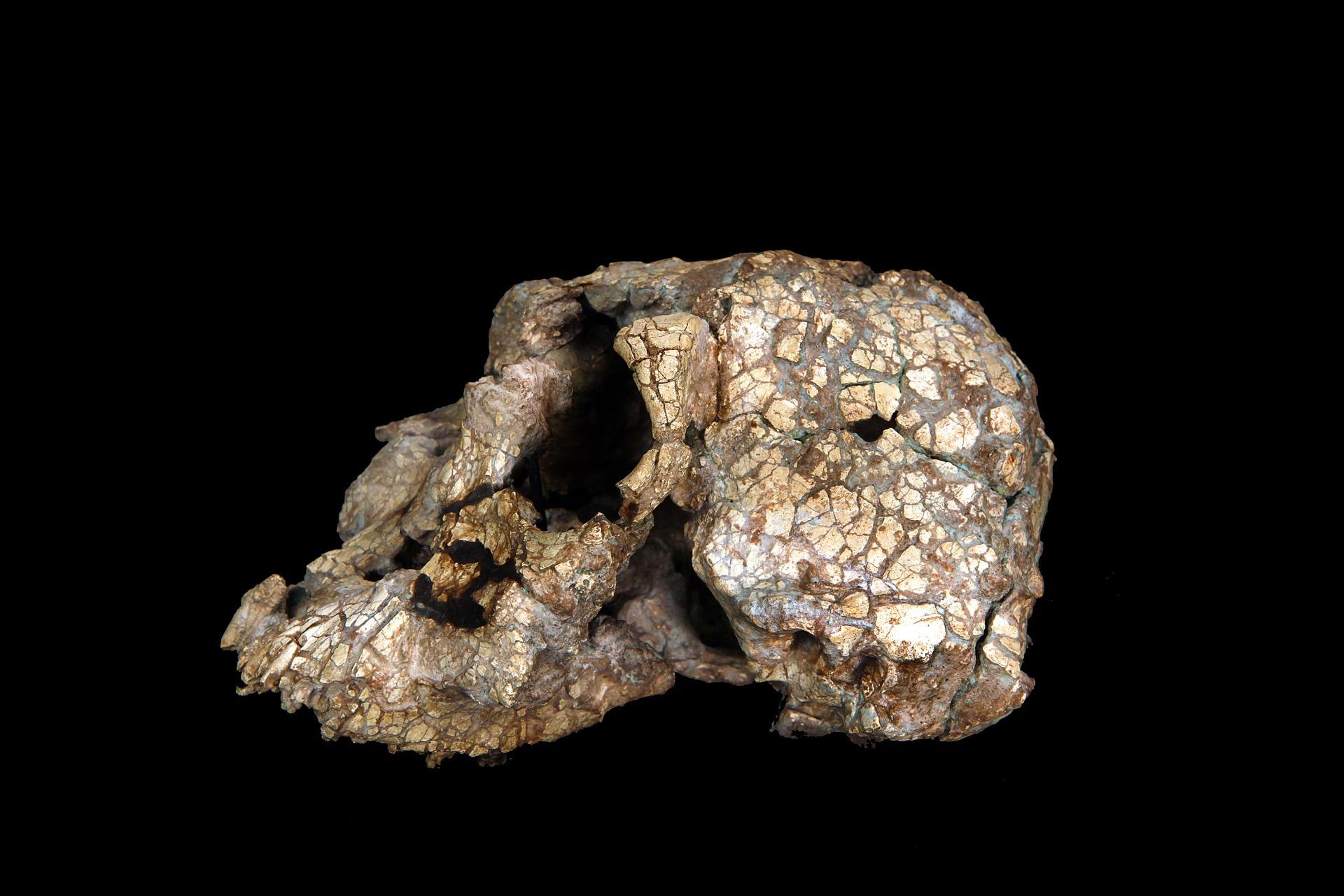
In the final week of the 1999 field season, fossil hunter Justus Edung spotted a scrappy upper jaw piece at Lomekwi. Preserved in clay substrate that expands and contracts with wet-dry cycles, the fossil was cracked and broken. Named Kenyanthropus for Kenya's contribution and platyops for its flat-faced appearance.
KNM-NP 59050 (Nyanyapithecus alesi)
Napudet, West Turkana
2.974695°N, 35.885329°E
KNM-NP 59050
John Ekusi (2014)
Nyanyapithecus alesi
Middle Miocene
skull
13.0
42
55
Ancient baby ape; 13 million years old
Contemporary with other Miocene apes
knmws16950
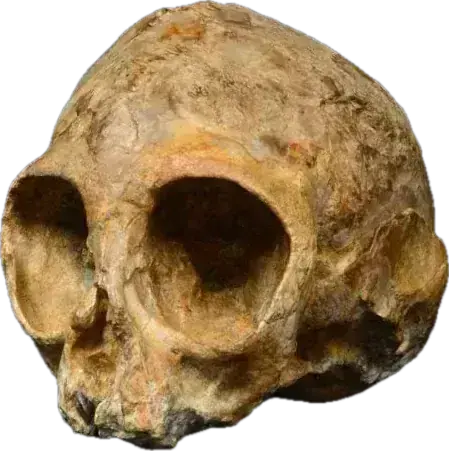
This remarkably complete skull was discovered at Napudet by John Ekusi, with the eye socket looking directly at him. Dated to about 13 million years, this is a baby ape named Alesi — the Turkana word for "ancestor."
KNM-WS 16950 (Afropithecus turkanensis)
Buluk, East Turkana
4.262093°N, 36.59402°E
KNM-WS 16950
Kamoya Kimeu (1984)
Afropithecus turkanensis
Middle Miocene
skull
17.0
65
15
Ancient African ape; pre-Eurasian distribution
Contemporary Miocene ape diversity
knmnp59050
https://africanfossils.org/hominids/knmwk-16999

After the Nariokotome discovery, Kamoya Kimeu and team found this skull of Afropithecus turkanensis, a Miocene ape dated at 17 million years. During the early Miocene there was extraordinary ape diversity restricted to Africa.
KNM-ER 732 (Paranthropus boisei)
Ileret, East Turkana
4.29972°N, 36.30602°E
KNM-ER 732
Henry Mutua (1970)
Paranthropus boisei
Early Pleistocene
skull
1.95
54
25
Female robust australopithecine; sexual dimorphism
Sexual dimorphism with male P. boisei specimens
knmer406
https://africanfossils.org/hominids/knmer-732?o=1

This partial skull with right side of face preserved was discovered in 1970 by Henry Mutua. Thought to be a female P. boisei, it shares anatomical characteristics with robust males but lacks the distinctive sagittal crest found in males like KNM-ER 406.
KNM-ER 64061 (Homo habilis skeleton)
Ileret, East Turkana
4.26129°N, 36.33406°E
KNM-ER 64061
Field team (2013)
Homo habilis
Early Pleistocene
skeleton
2.0
54
25
Most complete H. habilis skeleton
Contemporary early Homo specimens
knmer1813
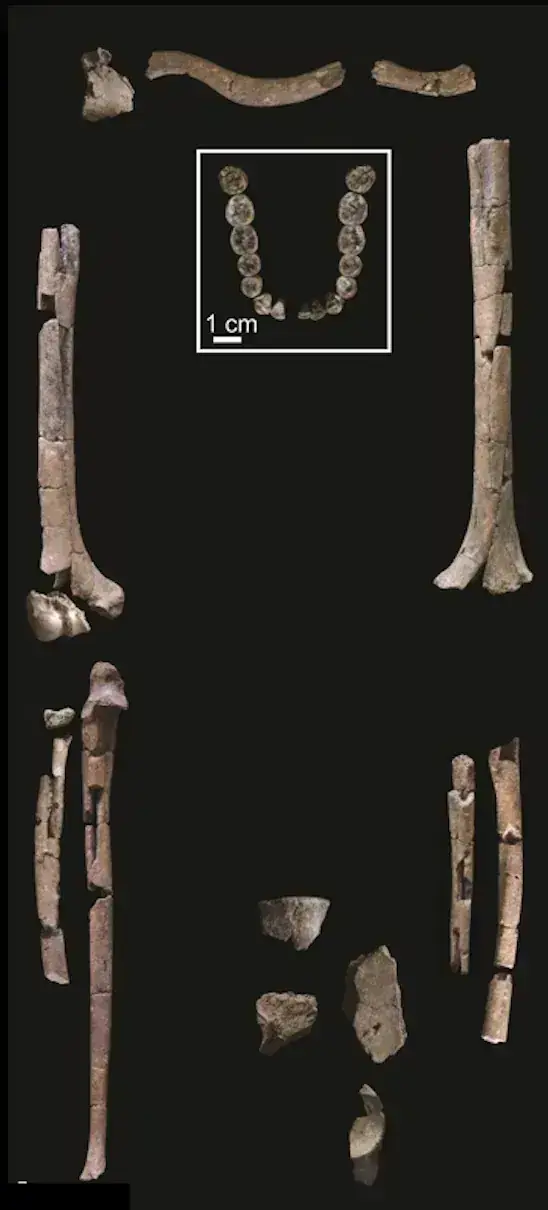
This partial skeleton of Homo habilis discovered in 2013 is the most complete H. habilis skeleton found to date, dated to approximately 2 million years. It includes collarbones, arm bones, and parts of a pelvis, bridging the transition from quadrupedal to bipedal locomotion.
KNM-ER 101000 (Paranthropus hand)
Ileret, East Turkana
3.91°N, 36.22°E
KNM-ER 101000
Field team (2019)
Paranthropus boisei
Early Pleistocene
hand
2.0
54
25
Sophisticated hand morphology; tool capability
Contemporary robust australopithecine specimens
knmer406,knmer732
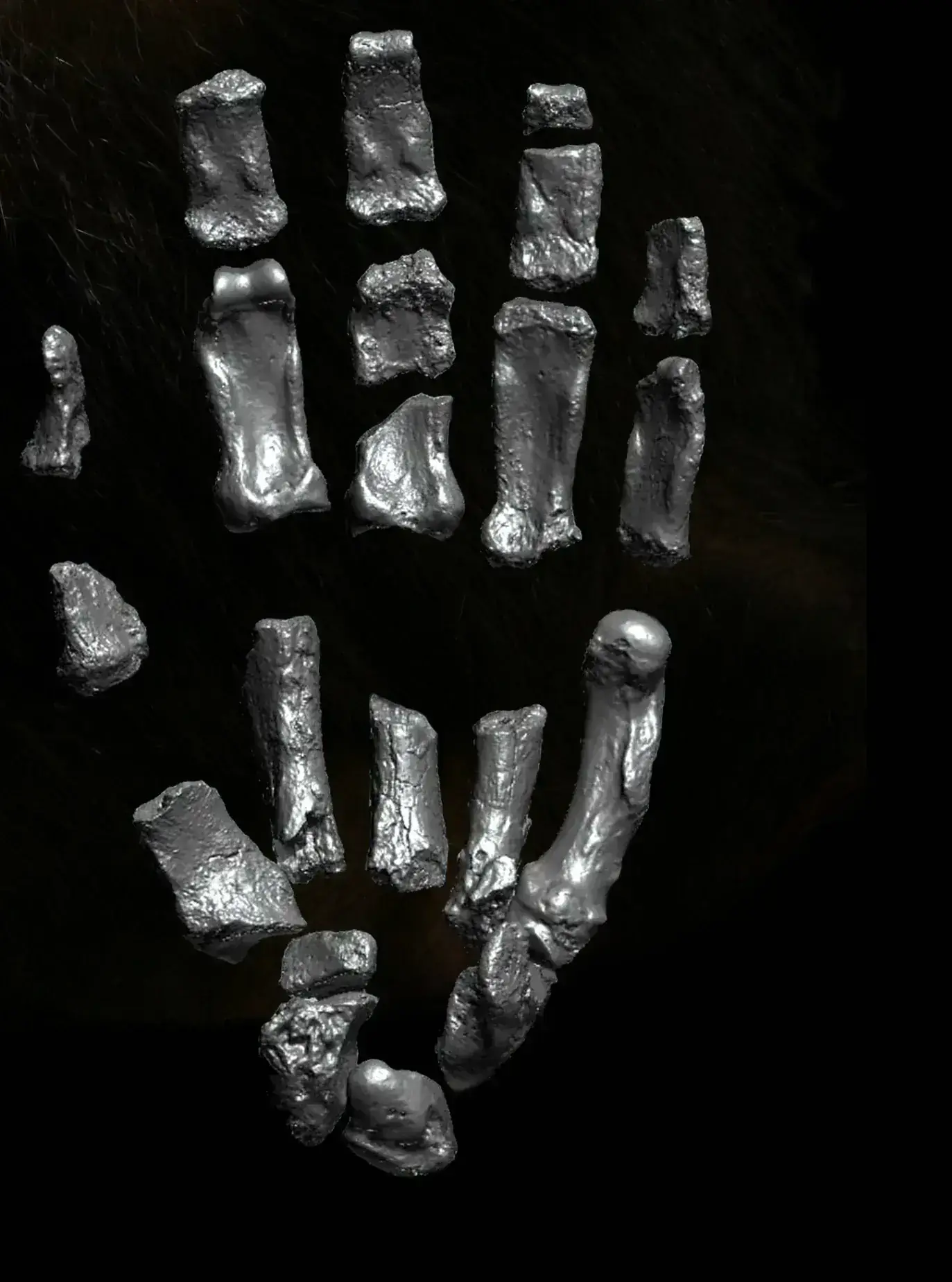
This recent discovery of a Paranthropus boisei hand shows this species had a surprisingly humanlike hand with long thumbs, straight fingers, and broad fingertips, suggesting capability for high precision grips and likely tool-making.